
uPVCvsAluminiumvsTimber-lookAnHonestComparisonforPoole&BournemouthHomes
uPVC, aluminium and timber-look, compared with real published numbers, not adjectives. One local installer fits all three, so there's no reason to steer you toward one.
- 5.0★from 25 Google reviews
- CertifiedAssure Insurance-backed
- 10+ YearsExperience
- GuaranteedFor 10 Years
Shape or material? And which material actually suits your house?
Searching "types of windows"? That usually means shape: casement, sash, bay. This guide is about material, uPVC, aluminium or timber-look. Here's a fast steer.
On a budget
Everyday replacement, best value: uPVC is usually the answer.
Modern or coastal
Slim sightlines, a contemporary look: aluminium is usually the answer.
Period or heritage
A conservation area or a period look: timber-look is usually the answer.
The numbers nobody else publishes
Real, cited manufacturer figures, not adjectives.
| uPVC | Aluminium | Timber-look | |
|---|---|---|---|
| U-value (against the 1.4 W/m²K Part L ceiling) | Under 1.3 W/m²K as standard on Rehau Total 70. As low as 0.8 W/m²K is achievable with the triple-glazed option, that's a best case, not the standard spec. | 1.6 W/m²K on a 1.0 W/m²K glass unit, the manufacturer's current published figure for Alitherm Heritage. That sits above the 1.4 ceiling on the standard spec. | As low as 1.2 W/m²K, a best-case figure for Timberlook, not the standard spec. |
| Security certification | PAS24 is an optional upgrade on the standard Rehau Total 70 spec, not standard. | PAS24:2016 tested on Alitherm Heritage, casement and fixed lights. Cortizo carries its own PAS24 certification. | Certified to PAS24 with uprated glass and hardware, not on the standard spec. |
| Frame depth and sightlines | Around 70mm typical. A multi-chambered profile needs the extra wall thickness to hit the same U-value. | 47mm frame, 59mm sightline on Alitherm Heritage. Slimmer, thanks to the thermal break. | 70mm frame, 58mm sash, deliberately profiled to mirror a timber joinery sightline. |
| Maintenance | Wipe clean, no repainting. | Wipe clean. The powder coat is built not to fade or rust. | No repainting or sanding needed, the finish is built into the uPVC, not applied to real wood. |
Swipe to see every column
The three, side by side
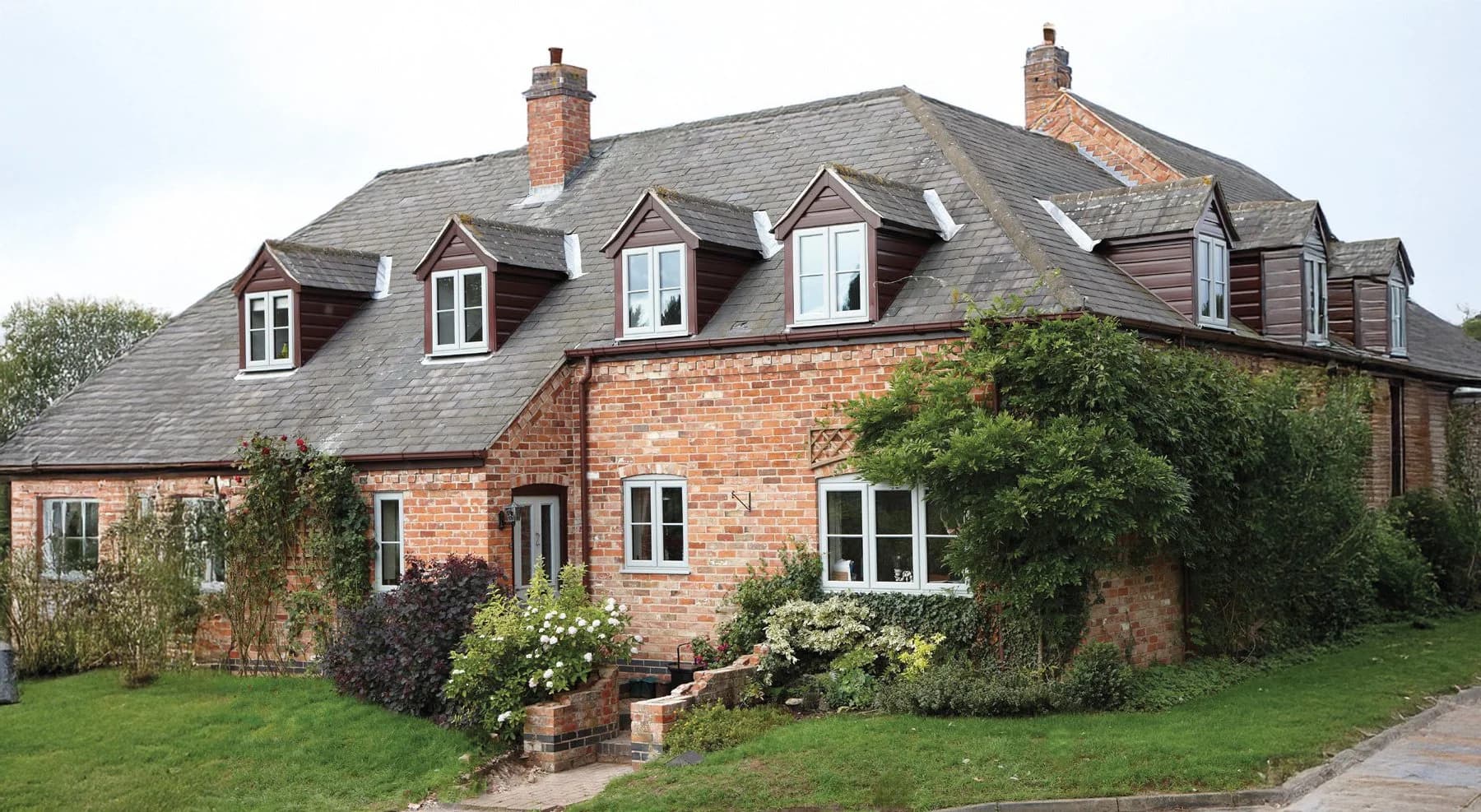
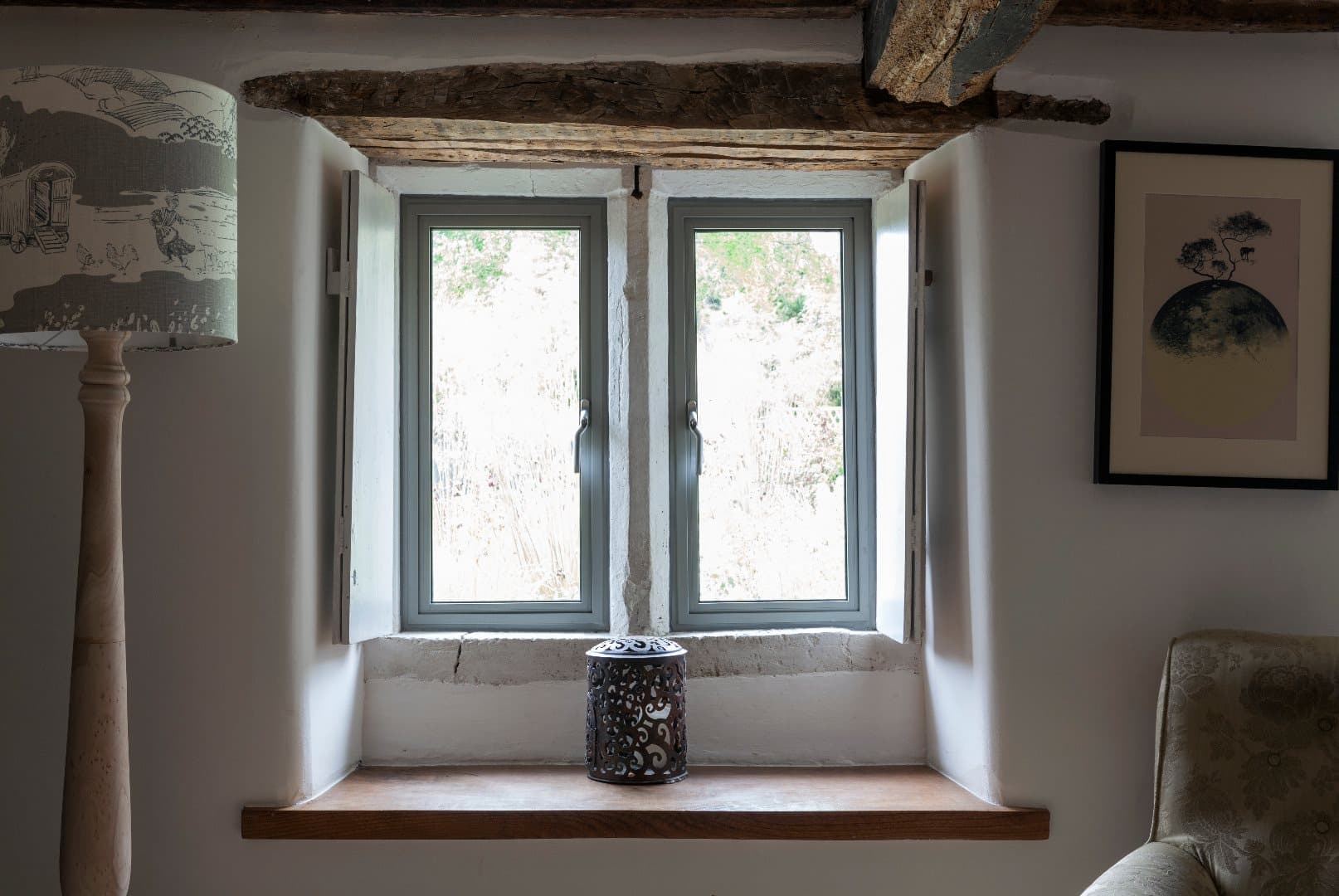
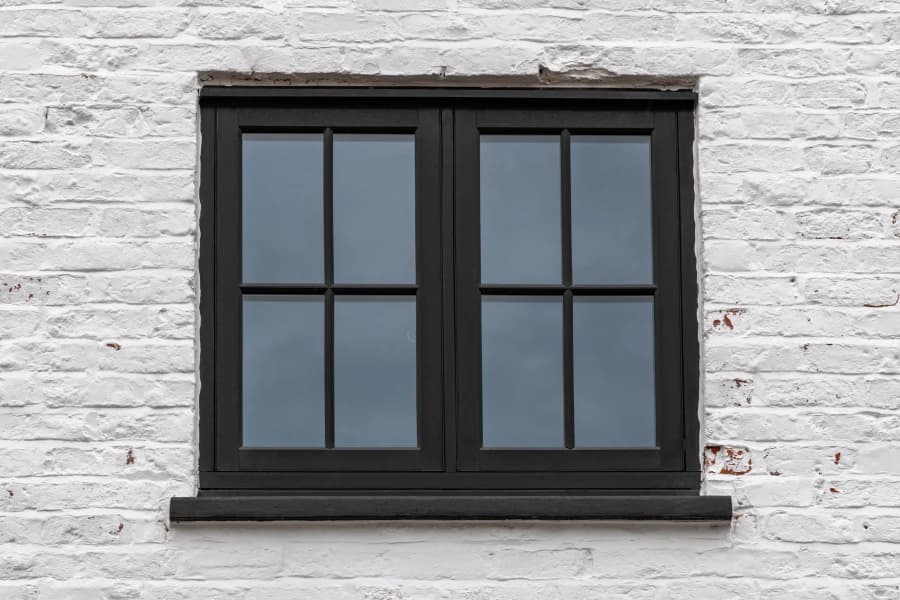
The same three product lines the table above just compared.
Manufacturer product photography, not photographs of a completed Wilshaw job.
A relative hierarchy, not a price list, see our full cost guide for real ranges
What each costs, relatively, and why we won't give you one number
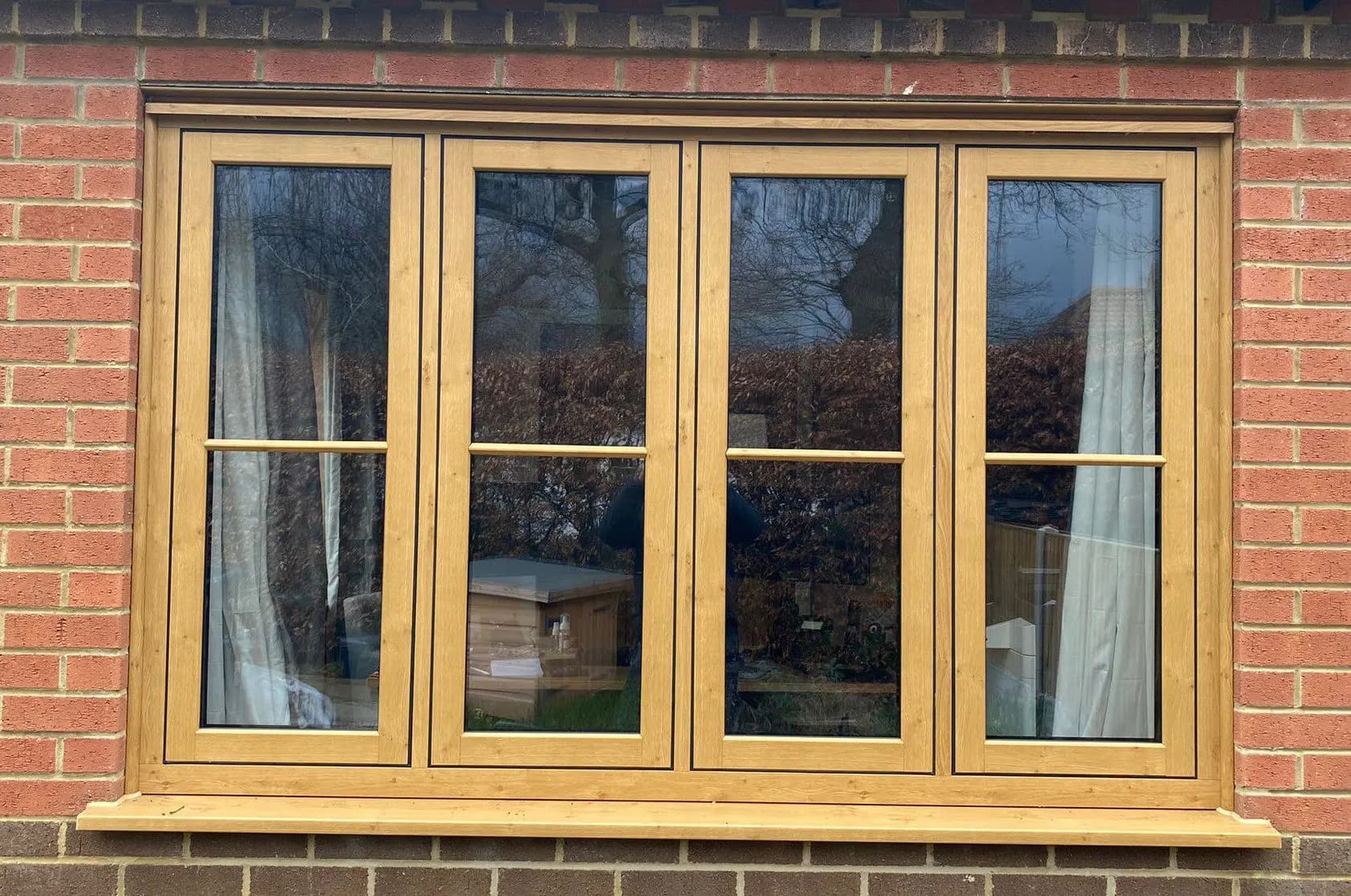
Timber-look windows
Priced at survey
Priced close to uPVC, because it's a uPVC product underneath, not real timber.
View serviceA five-minute walk from the sea
Which material actually survives a Poole or Bournemouth coastal address?
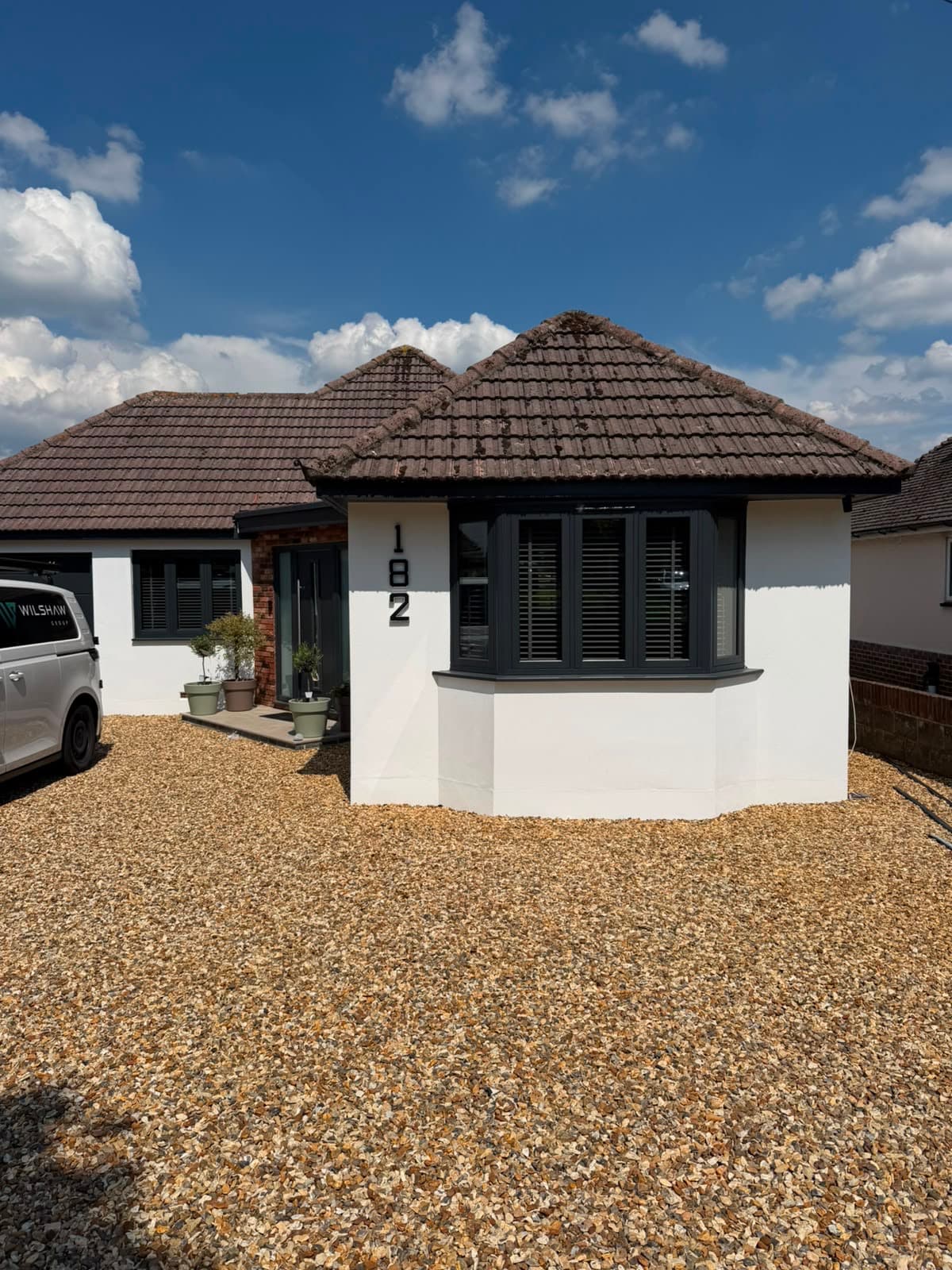
uPVC doesn't corrode and needs no repainting near salt air. Standard, non-marine-grade aluminium can start to corrode within 2 to 3 years within roughly 500m of open water, so we specify marine-grade hardware and coating on ours. Timber's finish breaks down faster in salt air too, typically needing repainting every 2 to 3 years in an exposed spot against roughly 5 inland. Timber-look, being uPVC underneath, doesn't have that problem.
- uPVC: doesn't corrode, no repaint cycle
- Aluminium: we specify a marine-grade powder coat and 316 stainless hardware, not the more common 304, close to the coast
- Timber-look: no repaint cycle either, it's uPVC underneath
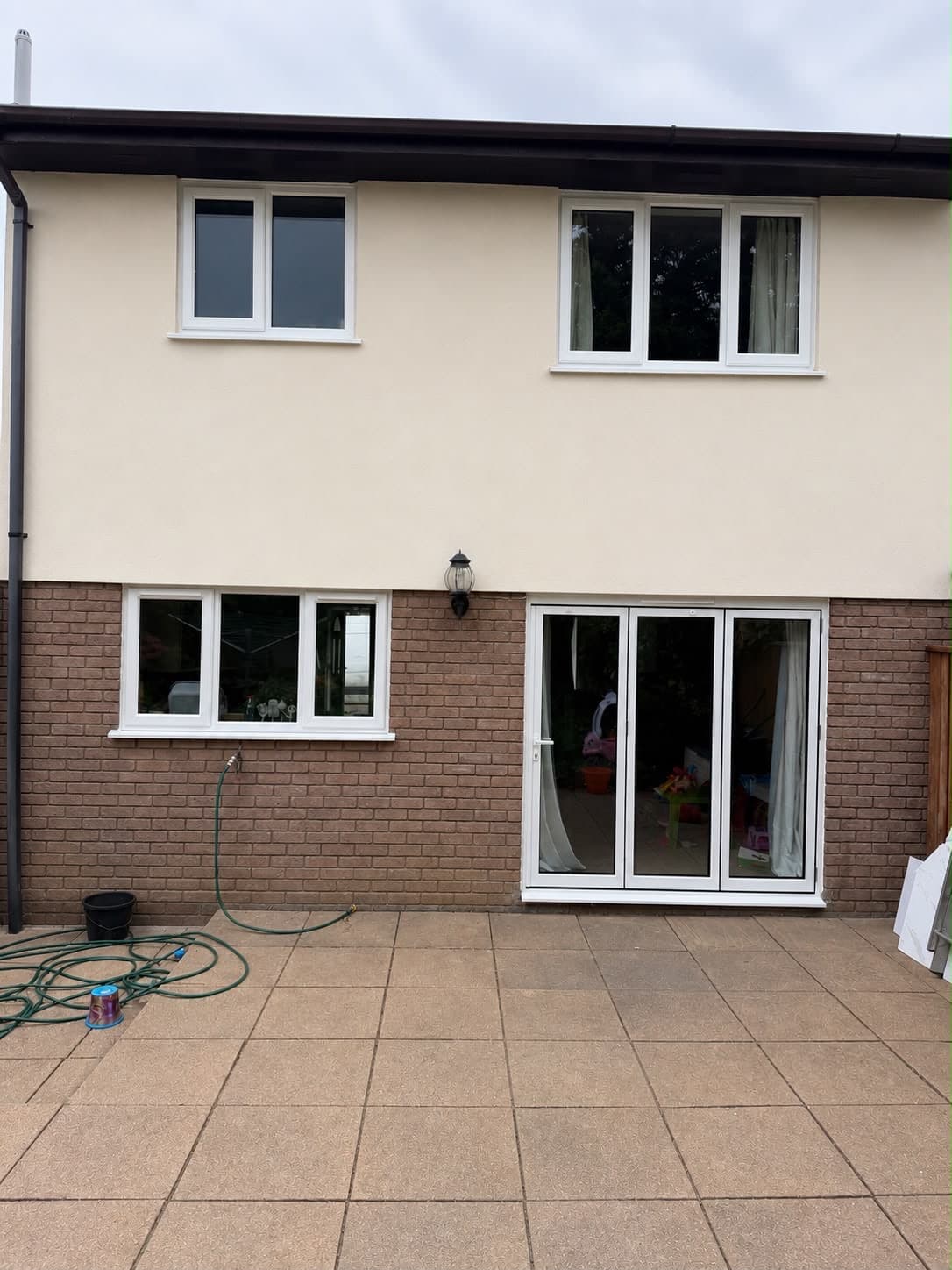
Poole Old Town, Christchurch, Dorchester
Will the council accept it in a conservation area?
Conservation area consent was abolished in 2013. The route now is ordinary planning permission, and like-for-like replacement often falls under permitted development with no consent needed, though an Article 4 direction can remove that right locally, and listed buildings are assessed individually. Planners generally look at appearance, profile, sightlines, glazing pattern and colour, not the underlying material, which is why a well-specified uPVC or aluminium window can sometimes be accepted where real timber seems assumed. Timberlook has its own track record here: a Cotswold Council heritage officer is on record saying its units have been accepted as a variation on a listed-building condition, and considered to successfully mimic traditional flush casements.
- Permission is always the council's own decision, always confirm before work starts
- See our full guide to planning permission and Building Regs for the complete picture
What actually goes wrong, and when
Grounded in decades, not day one.
uPVC
Typically 20 to 35 years. Hinge and gasket wear, and UV yellowing on lower-grade stock, is what actually fails first, not the frame itself.
Aluminium
Typically 30 to 45 years, since the metal itself won't rot or warp. Coating breakdown is the failure mode if it isn't specified marine-grade somewhere exposed.
Timber-look
Follows uPVC's lifespan profile, not real timber's repaint and reseal cycle, because that's what it actually is underneath the finish.
One installer, no single-material incentive
Why one installer for all three
We fit three real, named product lines: Rehau Total 70, Smart Alitherm Heritage, Cortizo and Timberlook, not just one. Most local installers only sell one material, worth remembering when they recommend it. Josh surveys every job himself, whichever material you end up choosing.
- Fits all three materials, so no incentive to steer you toward whichever one we stock most of
- Josh surveys every job personally, and brings colour swatches for whichever material you land on
- Fixed-price quotes, no hidden costs added once work has started
Frame depth, sightlines and why they differ
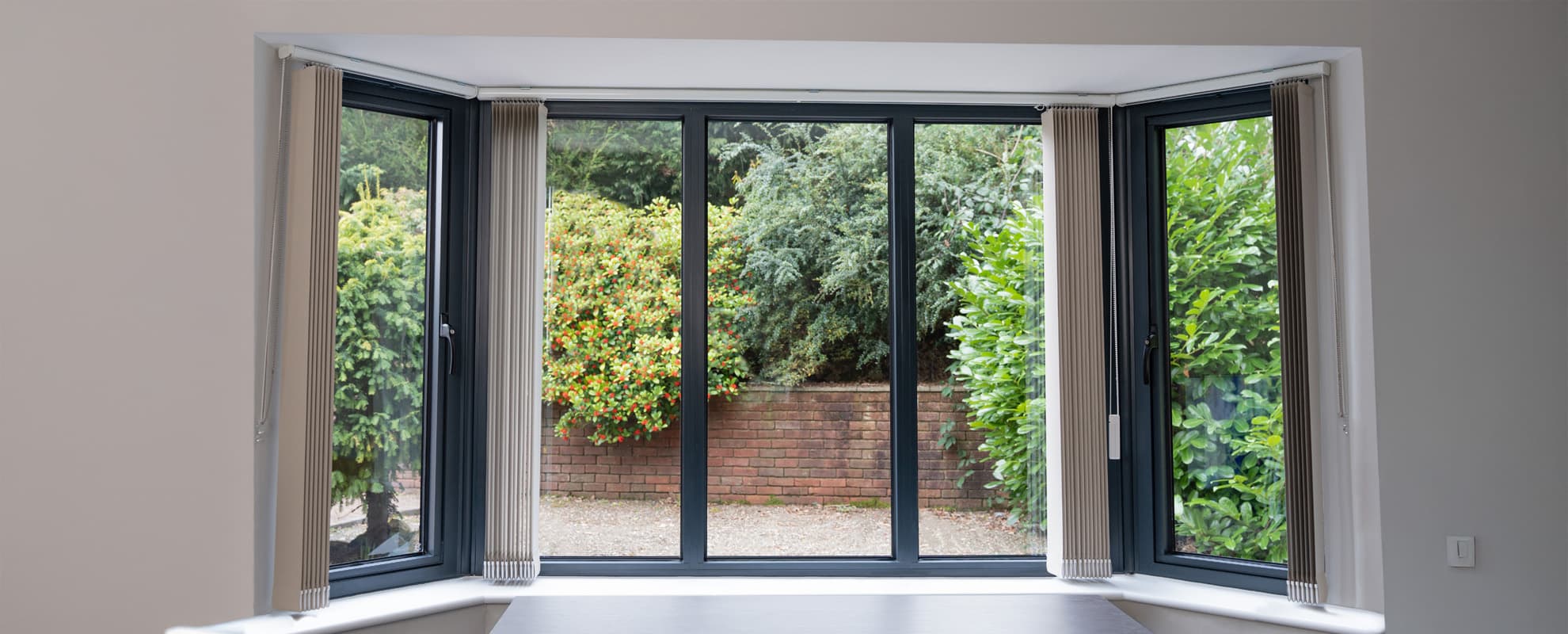
Aluminium conducts heat well, which is normally a problem for a window frame. A thermal break, a strip of polyamide inside the frame, solves it, and that's what allows aluminium's comparatively slim 47 to 59mm sightlines while still performing thermally. uPVC doesn't conduct heat as readily, so it doesn't need a thermal break, but its multi-chambered profile needs more wall thickness to hit the same U-value, which is part of why uPVC frames read visually chunkier, typically around 70mm.
Timber-look deliberately profiles a 70mm frame with a 58mm sash and the same chamfer and ovolo detailing you'd expect on real timber joinery, specifically to mimic that sightline. It isn't because the uPVC needs that depth to perform, it's a styling choice built into the profile.
Sightline width isn't just an aesthetic preference either. A slimmer frame means more actual glass for the same size opening, which is why aluminium often reads as the more contemporary choice on a bigger window or a set of bi-folds, where every extra centimetre of glass genuinely changes how much light gets in.
uPVC, aluminium and timber-look, properly explained
uPVC is the value choice and still the most common material fitted in the UK, low maintenance and reliably durable at 20 to 35 years. Aluminium costs more but lasts longer, typically 30 to 45 years, and its slim sightlines suit a modern extension or a coastal property once it's properly specified for salt air. Timber-look is a uPVC product engineered to look like painted timber joinery without timber's upkeep, which is why we price it close to uPVC rather than close to real wood.
PAS24 is worth understanding properly too. It's a whole-unit security test, not a single-component one: the frame, glazing and locking hardware are tested together as one system against simulated forced entry. Certification status genuinely differs by material in our own range. It's an optional upgrade on standard uPVC, tested as standard on both our aluminium systems, and available on Timberlook with uprated glass and hardware, not on the standard spec.
None of this means one material is simply 'better' than the others. It means each one suits a different property and a different priority. A straightforward family home replacing tired uPVC usually doesn't need to look any further than uPVC again. A period property in a conservation area often does better with timber-look, for the look and the planning conversation both. And a coastal or contemporary extension tends to suit aluminium, once it's specified properly for salt air. The honest answer to 'which is best' is almost always 'it depends on the house', which is exactly why we fit all three rather than push whichever one we happen to stock.
What Poole & Bournemouth customers say
Read the reviews for yourself on our Google profile.
5.0
Natasha Evans
Josh and his team worked incredibly hard replacing all of the windows and doors in our house, including fitting a beautiful bifold door in place of our old French doors. We could not be happier with the results. The quality of the workmanship was excellent, and Josh was fantastic with communication throughout the whole process. He was reliable, professional, and kept us updated every step of the way. We would highly recommend him to anyone looking for high-quality work and great service.
Andy
Josh installed our new windows, triple track doors, roof lights and front door at our house in Bournemouth. A very professional, tidy and efficient service from beginning to end. Would highly recommend Wilshaw Glazing.
Limor Feingold
A small job well done. I used Wilshaw Glazing to install a new double glazed window in my kitchen - a relatively small job. They were highly efficient - providing a quote in advance and making sure I was happy with the proposed window confirmation. The window took 3 weeks to manufacture, and was installed as soon as it was ready. They installation was done on a Saturday morning - it only took 2 hours and the team took care while they were on site. Overall very satisfied and would be happy to recommend
How much should I expect to pay for double glazing?
It depends on the material, size and spec, so we don't publish a fixed price list. Our cost guide has our typical installed price bands for each material, or ask us for a fixed quote on your own job.
Which is the best double glazing company?
We'd say the one that surveys the job properly and gives you a fixed price, not the loudest advert. We fit three real named product lines, not just one.
Is uPVC or aluminium better, or cheaper?
uPVC is cheaper and still performs well. Aluminium costs more but has slimmer sightlines and typically lasts longer. See the numbers table above for the real comparison.
Is "timber-look" real wood, and does it cost the same as uPVC?
No, it's a uPVC window engineered to mimic timber joinery, and we price it close to uPVC, not close to real timber.
Will the council accept it in my conservation area?
Often, yes, planners usually look at appearance rather than material. It's always the council's own decision though, see the section above for the full picture.
What happens next if I want a quote, or I'm still not sure which material is right?
Tell us roughly what you're after and we'll talk you through it. Josh surveys every job himself before quoting a fixed price.
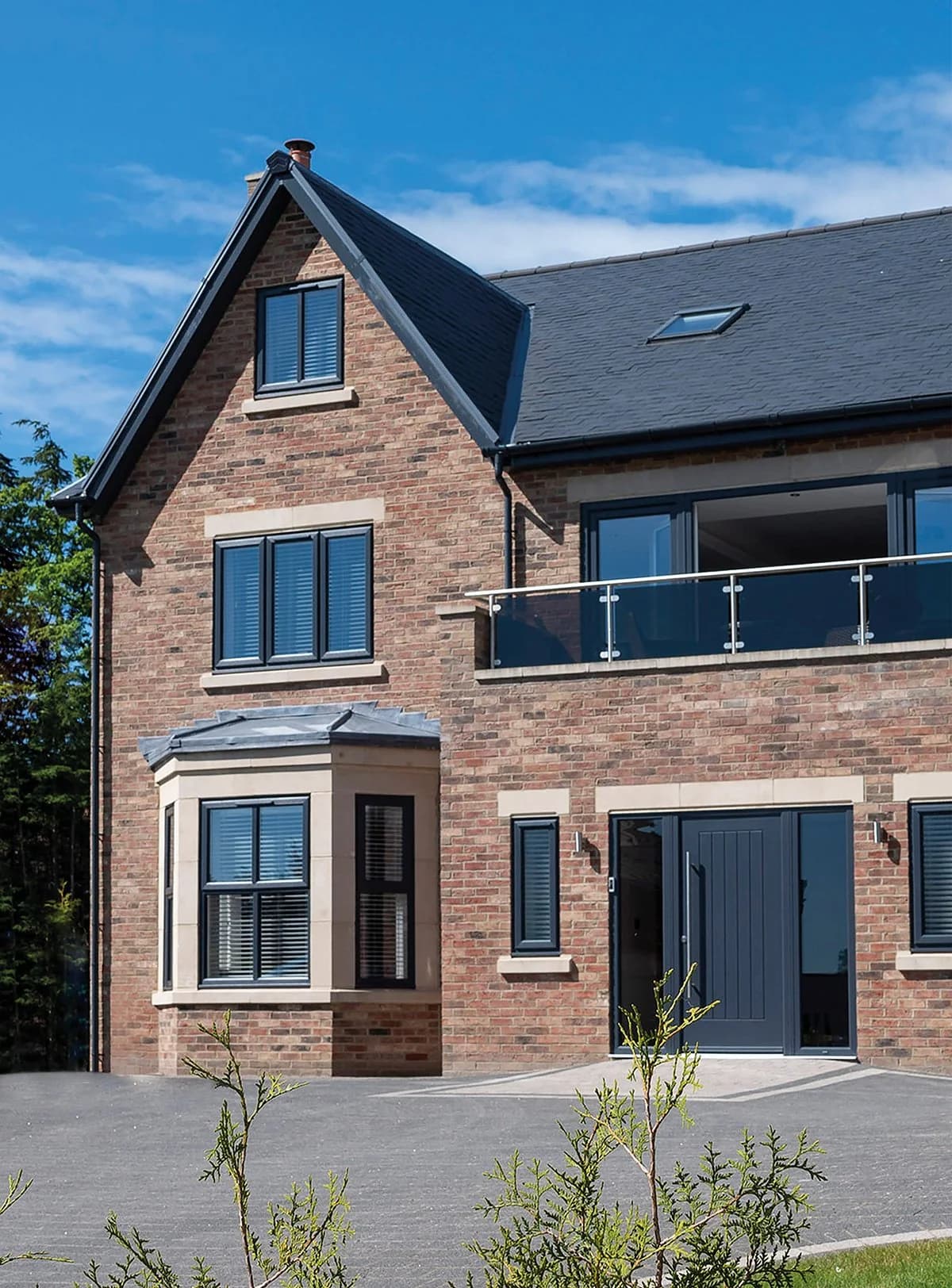
What New Windows & Doors Cost
Real, cited cost ranges, not adjectives.
Learn more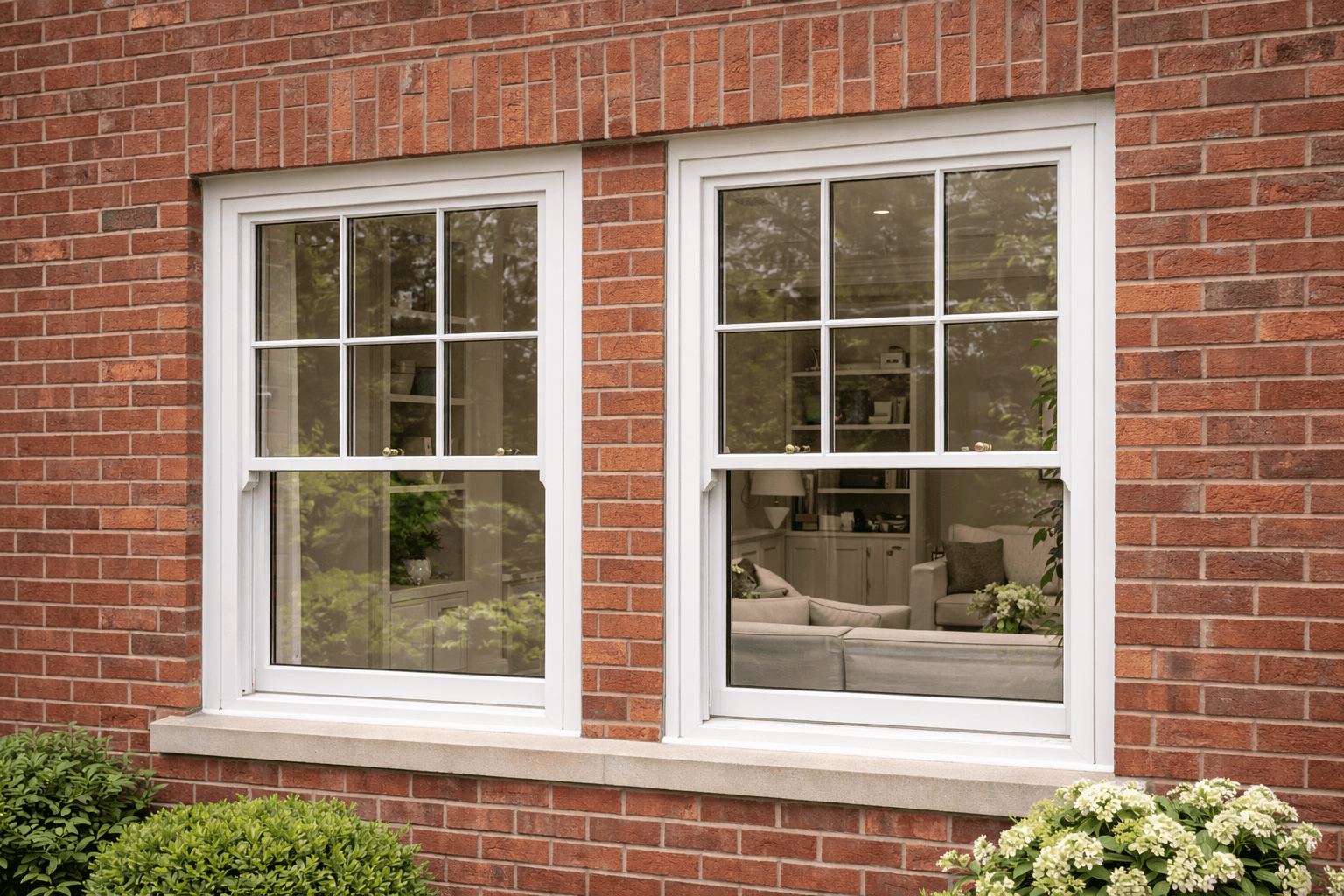
Planning Permission & Building Regs
Conservation areas, listed buildings and permitted development, explained plainly.
Learn more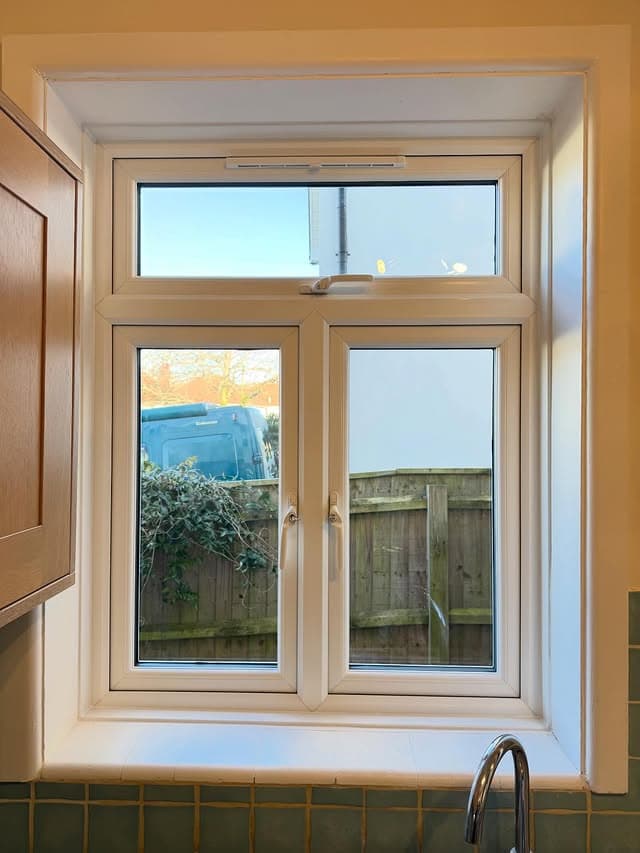
Misted Double Glazing
A clouded pane is a failed sealed unit, and usually only the glass needs replacing.
Learn moreMore Advice & Guides
The rest of our advice, in one place.
Learn more
Where we work
Covering Poole, Bournemouth and the towns around them.
Find your perfect windows
Tell us roughly what you're after and we'll help you work out which material's right, then give you a fixed quote.
Get a free quote
Tell us what you need and we'll come back with a price. No pressure, no hard sell.
Prefer to talk, or email? Call Wilshaw Glazing on 01202 144424 or email Josh.Critchley@wilshawgroup.com